An AI influencer is a virtual character that posts like a real creator: photos, short videos and a recognisable look. Nobody in the frame is a real person, and the character exists only in generated images and clips.
The next question is a practical one: how do you keep the same face across dozens of posts? That is what this guide is about, with three new photos of one fictional woman as the example.
What an AI influencer is used for
- Brand mascots that appear in ads, social posts and product pages.
- Virtual models for fashion and lifestyle shots when a real shoot is not an option.
- Fictional storytelling accounts: a character with a city, a style and a routine.
An AI influencer is not a shortcut to an audience. A feed still needs a point of view, regular posts and honest labelling. The tool only removes the photo shoot.
Why one face is the hard part
If you write "the same woman as before" in a prompt, the model has nothing to compare against, so every image invents a new face. Followers notice within two or three posts. That is why a character has to be anchored to reference images, not to words.
In REFVIO you upload two photos once: a close-up of the face and a full-body shot. They become the character profile, and every new photo or video is generated from them. Photo modes work from a reference (pose, outfit or light taken from a chosen shot) or from a text description. Video modes can animate a photo, copy motion from another clip, or fill the gap between a first and a last frame.
Three posts from one character
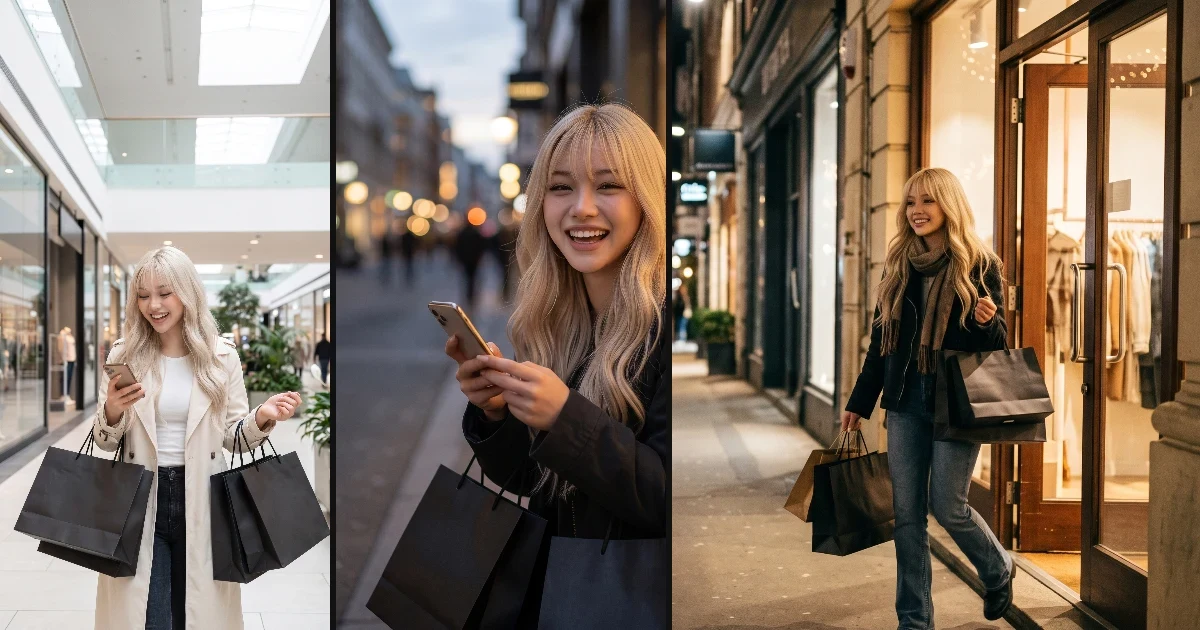
For this article we took the woman from our guide to a consistent AI character, a fictional character and not a real person, and asked for three new posts of the kind an influencer would publish. We used two of her earlier images as references. Model Nano Banana 2.1, "From description" mode, 3:4, 2K. One image costs 12 credits (price in the cabinet on 19 November 2026). Each scene is a single run, with no picking from several tries.
The prompt follows one pattern: "Candid photo of the woman from the reference photos [scene]. Keep her face and hair identical to the reference photos." The scenes:
- filming a vlog of herself with a phone on a busy sunny street, laughing mid-step
- trying on a jacket in a boutique and spinning toward the mirror with a shopping bag
- on a rooftop terrace at golden hour, laughing and fixing her windblown hair with a coffee in her hand
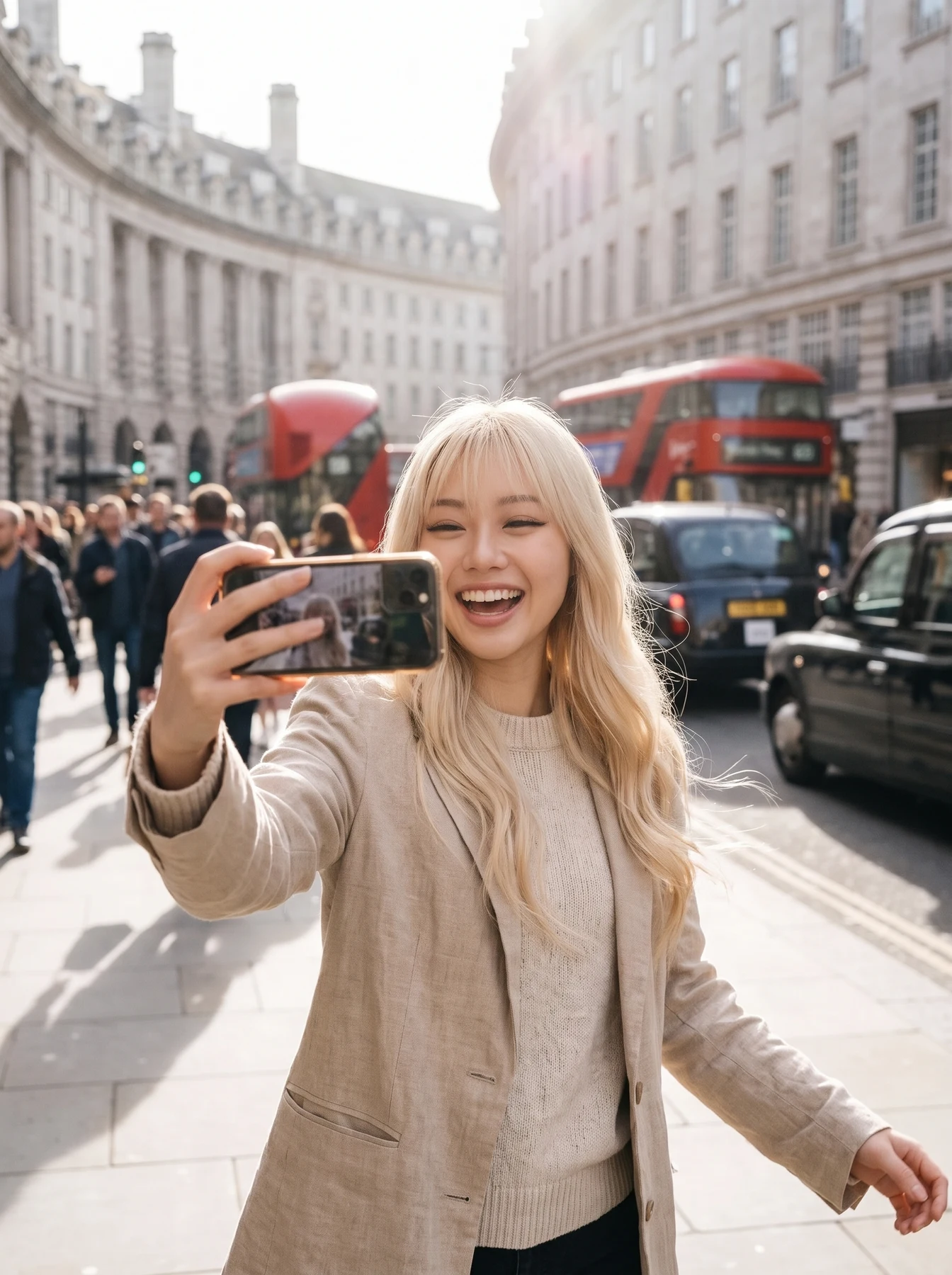
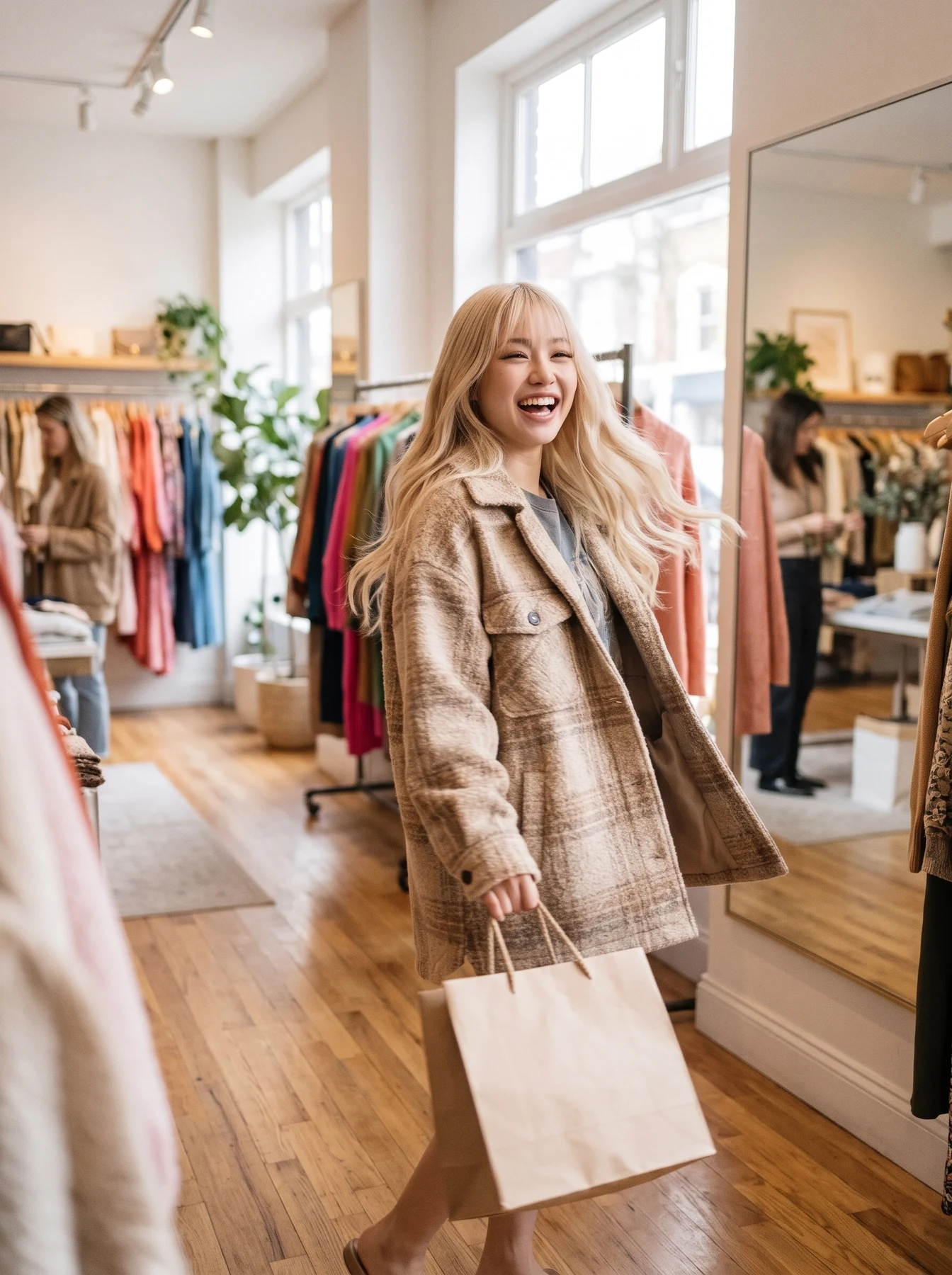
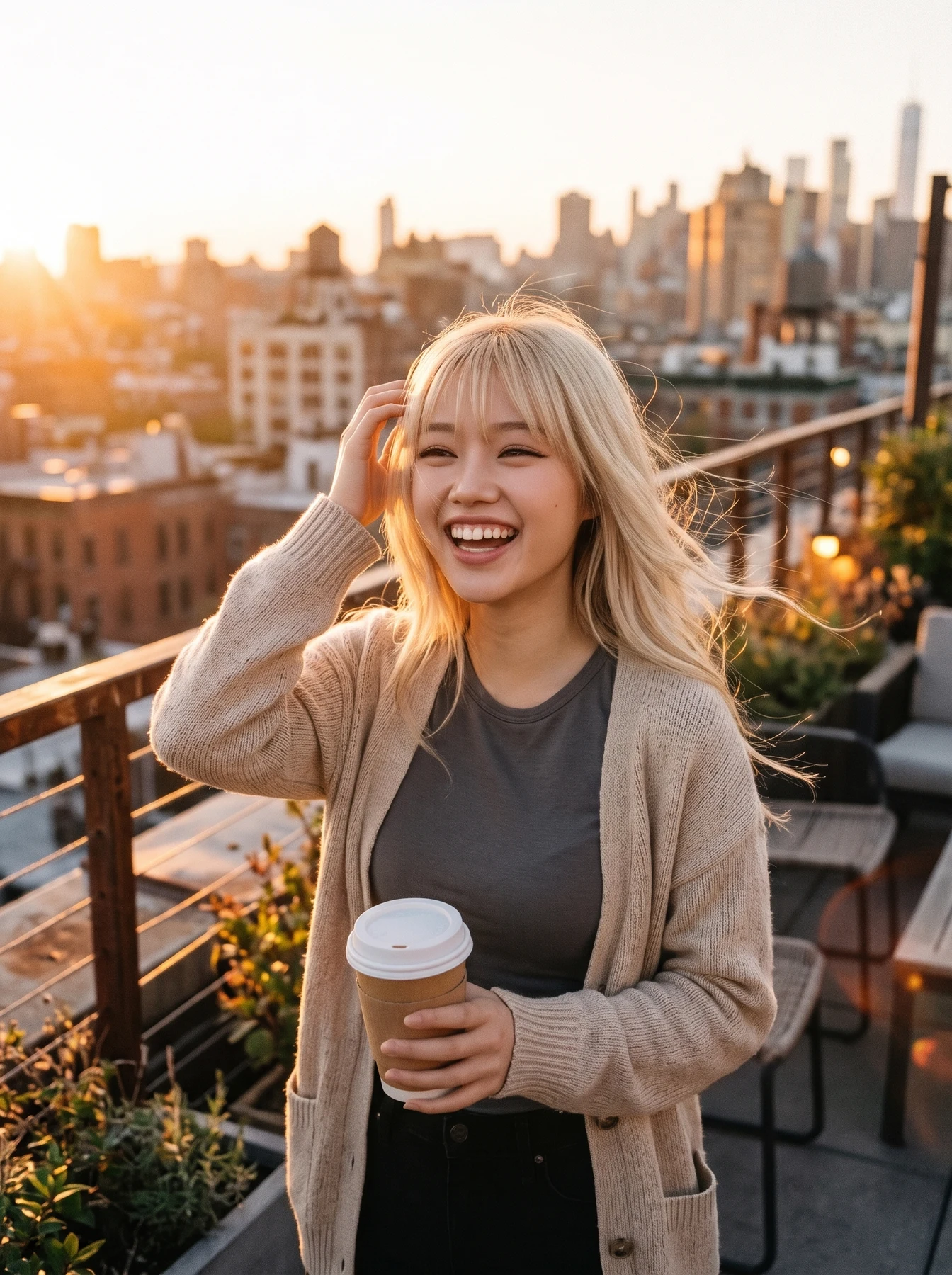
Clothes, setting and light change because we asked for that. In our judgment the face reads as the same person in all three, and as the woman from the earlier guide. This is one run per scene, not a statistical test: another run will differ in details.
How to build your own
- Decide who the character is: age, style, setting. Keep her fictional, or use a person who has agreed to it.
- Prepare two references: a clear face close-up and a full-body shot in even light.
- Create the character profile from these two images and reuse it for every shot.
- Write the prompt for the scene only, and add one line: keep the face and hair identical to the references.
- Put the results side by side and check three places: eyes and brows, nose and lips, hairline and forehead.
- For video, start from a photo you have already approved, ask for one simple action, and compare the first and last frames.
Where it breaks
- The face drifts between scenes, especially in profile or in harsh light.
- Hands and fingers go wrong when she holds a phone or a cup.
- A big outfit change can make the same face feel like a different person.
- Small details such as freckles or jewellery appear and disappear.
If two of the three places do not match, redo the shot. A recognisable face is not guaranteed, because generation is not deterministic. When likeness matters most, the site suggests Nano Banana Pro.
Rules before you post
- Use only a fictional character or a person who has agreed to be used. No celebrity lookalikes.
- Turn on the AI-content label on the platform you post to, and do not present a virtual person as a real one.
- Read the Safety page of the service to see what is not allowed.
Common questions
Is an AI influencer legal? Rules depend on the country and the platform. As a baseline, say that the content is AI-generated and never use a real person's face without consent. If you work with brands, check the contract and the local advertising rules.
Do I have to label it as AI? Platforms ask for it, and a clear label protects you. Use the AI-content toggle and say it in the profile too.
How many photos do I need to start? Two references are enough to create the character in REFVIO: a face close-up and a full-body shot. Every later shot reuses them.
Can I make video too? Yes. Start from an approved photo and use the animate mode: Seedance 2.0 makes clips of 5 to 15 seconds.
What to do next
Take two references of your own fictional character, make three different scenes with one line about the face, put them side by side and run the three-place check.